
Power Scale Soaring Part 6
by Alan Hulme
originally published in Q&EFI Magazine No 42 August 2005
Alan Hulme continues the history of PSS in the penultimate part of his series…
Valkyrie
The first PSS meeting of 1997 took place at the Hole of Horcum in the North Riding of Yorkshire and as usual this was well attended. The surprise entry this time was a North American XB-70 Valkyrie canard prototype bomber designed and flown by Chris Collis.
 It had a fuselage length of 84” and a wingspan of 60”. The all up weight was 7lbs giving a low wing loading of only 10oz/sq foot. Chris used an Eppler 374 semi symmetrical section on this model.
The aircraft was flown convincingly and since then it has been acquired by Simon Cocker, (photo 1) seen here with the model on top of Bosley Cloud, Cheshire.
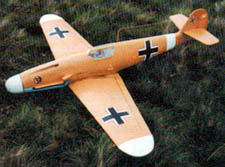 Jim Ellis, from Carnforth, Lancashire, entered a neatly finished Messerschmitt Me-109 F4 at this meeting which had a span of 60” and a total weight of 5 1/4lbs for a 21 oz/sq foot wing loading. Jim used an Eppler 193 section on this own design. (photo 2)
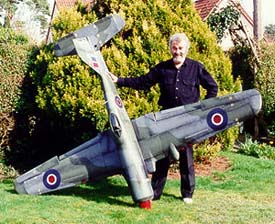 During the year PSSA member Martin Hursthouse, from Ferndown, Dorset, built a model of the Blackburn Firebrand. (photo 3) This large model was produced to 1/6th scale giving a wingspan of 102″ and a max wing chord of over 20″. The fuselage was mainly constructed from blue foam whilst the flying surfaces were built up from balsa, spruce and ply. The Eppler 374 wing section was chosen for this model. The total weight of 19lbs produced a high wing loading of 27 oz/sq foot. In spite of the weight this model performed well in relatively high winds of 20 – 25 mph. Martin’s PSS model collection also includes large models of the Fiesler Storch and the Focke Wulf FW-190.
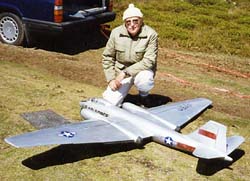
 At the 1997 Clwyd meeting local modeller Vic Steel brought along his own design of the Martin B-57D bomber, the stretched wing version of the Canberra, built under licence for the American air force. (photo 4, right)
This model had a span of 106” and a weight of around 8lbs. The aerofoil section used was an RG15. The fuselage was of built up construction and was clad in 1/64th. sheet plywood. Wings were made from foam as were the tail areas.
Prizes
Two new silver cups were introduced by the Power Scale Soaring Association for annual competition from 1998 onwards. These were designated the ‘Northern’ and ‘Southern’ PSSA Trophies. They are competed for by our members at various venues in rotation.
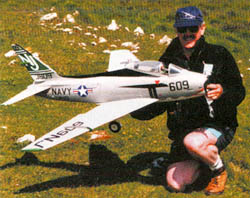
Early in 1998 our regular PSSA contributor from the Southern area, Terry Lidstone, produced his winter design and build project in the form of a superb North American FJ–4B Fury jet fighter. (photos 5 and 6)
-
- Terry Lidstone with his new creation
-
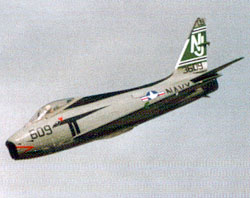
- FJ-4B Fury in flight
This is the U.S. Navy version of the F-86 Sabre fighter. The aircraft was flown in the Crook Peak PSS event for 1998 organized by the West Mendips Soaring Association and gained first place to win the Southern Trophy. This model had a wingspan of 52½ “ and weighed 5 lbs giving a wing loading of 18½ oz/sq foot. The built up construction included an 1/8th” sheet balsa keel with 3/16” balsa half formers on either side covered with 3/32” balsa strip planking. The wings were made from foam skinned with obechi whilst tail areas were of built up balsa construction covered with sheet balsa.
Following the Crook Peak meeting the next event was held at Pendle Hill, Lancashire where local modeller, Jack Edwards, turned up with two outstanding new models. Jack surprised us all with his own version of 40” span model of the Hawker Fury biplane, built mainly of white foam. (photos 7 and 8, below)
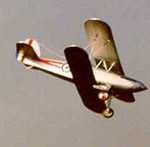
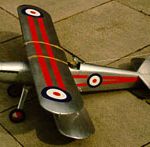
The total weight of this aircraft was just 36 ounces giving a wing loading of a mere 10 oz/sq foot. Ailerons on the lower wings and elevator were the two controls used. During the meeting the wind speed varied between 1 and 10 mph but in spite of this Jack flew the model in a most realistic manner.
 Jack’s second entry was a Zlin 526A Akrobat, constructed with a fuselage largely made from blocks of white polystyrene foam. (photo 9, left) The wings were of built up construction and used ribs cut from blue foam sheeting.
This model won the award for the best prop driven aircraft design and the Hawker Fury the award for the most innovative design.
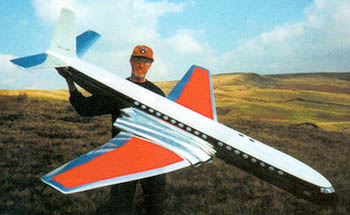 A third magnificent model entered at Pendle was a De Havilland Comet airliner designed and built by Bill Martindale from Morecambe, Lancs.
This most attractive aircraft was made from a composite balsa, foam construction covered in veneer. The wing span was 78” and the total weight 12½ lbs. (photo 10, right)
Neil McHardy, not to disappoint us, brought along yet another new own design in the shape of the Polish Iskra jet trainer. It had ideal proportions for a PSS model with its 48” span and all up weight of just 2 1/4lbs and 14 oz/sq foot wing loading. (photo 11, below left) Steve Griffiths entered a smart looking own design of the Martin Baker Mk. 5 fighter prototype which has since proved to be a fine performer. (photo 12, below)
-
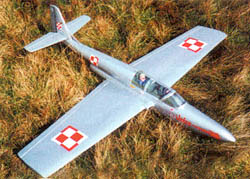
- Iskra trainer from the McHardy stable
-
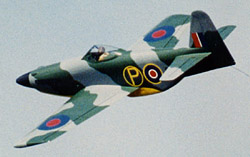
- Martin Baker MB5 in purposeful pose
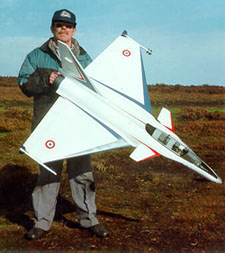 The last event of 1998 was held at the Hole of Horcum, on the North Yorkshire moors. It saw one of the largest attendances to date, 27 competitors entered with a total of 67 models.
The overall winner was Bill Martindale with his Comet airliner whilst Peter Walkinshaw, from Scarborough, took second place for jet aircraft with his latest design of the French Rafale CO 1 canard fighter. (photo 13, right)
The model had a wing loading of 19 oz/sq foot and a span of 52”. Control of the model was achieved via elevons and foreplane. A built up construction was used throughout.
We were pleased to welcome a strong contingent of Belgium modellers at this meeting when Paul Janssens and friends arrived. (photo 14, below left) Paul had brought with him a most attractive Gulfstream G-5 finished in US Coast Gaurd colours (photo 15, below right) whilst other models in the Belgian party included a Fairy Firefly, Macchi 202 and a T-33 Shooting Star.
-
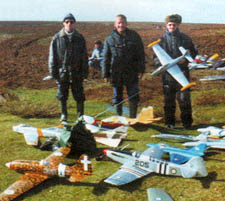
- Welcome visitors from Belgium
-
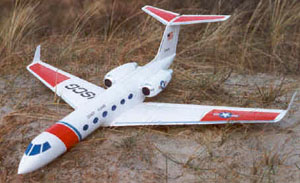
- Superb Gulfstream G-V – very nice lines!
Plans for all these aircraft are currently available from the Traplet Plans Service – see table at bottom.
Bill Glen of “Spruce Goose“ fame, from Redcar, flew his own design of the Boeing B-50 in this event. (photo 16, left) The model is a development from the famous B-29 atom bomber but with more powerful engines and an increased area fin. It had a wingspan of 118” and length of 78” and looked most impressive in flight. Bill used the NACA 4415 section for the wings which he thickened by 15% at the root. The section is similar to the Eppler 205 flat bottomed profile.
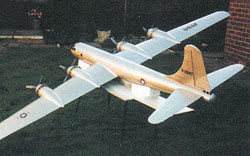
Huge B-50 performed well at Horcum
Putting in the Effort
In 1999 the first meeting was at the same location. Mick Chadwick, from York, had obviously been hard at work over the winter months judging by his latest entry, an own designed model of the Supermarine S6B outright Schneider Trophy winner. (photos 17 and 18, below)
-

- Mick Chadwick and his unusual S6B model
-
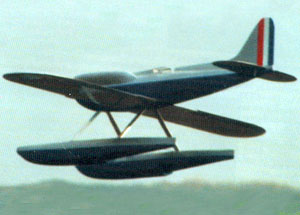
- Schneider pass – not your average slope model!
This first rate model had a span of 63” and a total weight of 6½ lbs. The wing loading came out at 22 oz/sq foot. Construction was of foam and balsa the floats being covered on the underside with 1/32” ply for protection in landing. Flying this model was a little different to that of the usual model layout due to the weight of 2½ lbs of floats hanging below the fuselage! The aircraft has however been put through its paces on several occasions since this meeting.
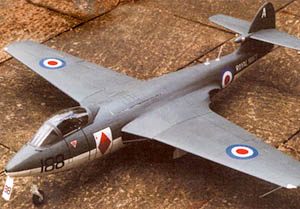
In May 1999 a new creation from the workshop of Terry Lidstone appeared on the scene in the form of a Hawker Seahawk. (photo 19, left)
It used an Eppler 374 semi symmetrical section and had a wingspan of 52”. Construction was mainly of balsa and the finish was Solarfilm. The wing loading was just 15 oz/sq foot. This aircraft has been entered in several events since then and performs well.
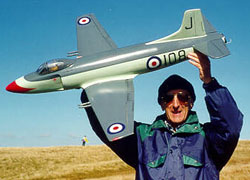 Late in 1999 the Pendle Hill, Lancs. meeting was held and here yet another new design by Stewart Redfern, from Chester, appeared this time his Supermarine Attacker jet fighter. The model was fairly light weight at 3 lbs and used an Eppler 374 section on this 43” span model. (photo 20, right)
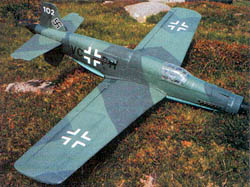 Around this period Stan Jones, from Conway, North Wales, designed and built his own version of the Dornier 335 Phiel (Arrow). (photo 21, left)
The twin engined push-pull layout with additional under fin made for an unusual shape in the sky.
This 60” span model was designed with basic box construction for the fuselage with formers added and then planked with balsa. It was then covered in brown paper stuck down with PVA paste. The wings of Clark Y section were of built up construction sheet with 1/16th” balsa. The all up weight was 3¾ lbs. Controls were aileron and elevator.
Overseas
Over the last 18 years I have arranged for several articles to be published in overseas magazines illustrating the activities of the PSSA which resulted in good coverage of our model designs. In 1987 the editor of the French magazine “Model Reduit D’avion”, (MRA), and similarly the editor of the American magazine “R.C.Modeler“ provided excellent publicity for us in the same year. More recently we have enjoyed good publicity in the French publication “Looping“ through the cooperation of the then editor Laurent Berlivet. I like to feel that in some small way all of these articles may well have encouraged modellers in these countries to pursue this branch of our hobby.
During May of 2000 I participated in the well attended French model gliding 4 day meeting in Macon, Burgundy, France. One day is set aside for PSS competitions. I took along 3 models, a P-51D Mustang, a Kawasaki “Tony“ and a Focke Wulf FW-152. Approximately 40 models were entered and everyone was therefore restricted to a single entry, in my case the Tony. Unfortunately the PSS day proved to be light on wind and flight times were relatively short. I finished up well down the points list but thoroughly enjoyed the experience and particularly the family atmosphere of the meeting. The variety of model designs was well up to our UK standard. Following this visit and with the help of Didier Cervera, organizer of the Macon event, and Laurent Berlivet I arranged to transfer payment for one of my PSS articles published in “Looping“ to enable them to purchase a trophy the design of which was chosen by the French. This trophy known as the “PSSA Trophy de France“ has since 2001 been competed for as first prize at the Macon meeting and seems to be much sought after.
Back in the UK
In 2000 the West Mendips Soaring Association held their annual PSS event at Crook Peak at which those attending witnessed the first competition flights of a large Consolidated PBY–5 Catalina designed and built by club member Ken Merritt. (photos 22 and 23, below)
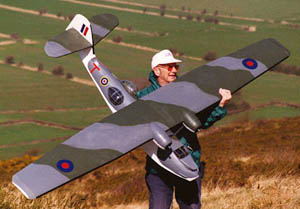
-
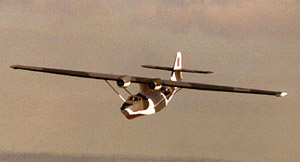
- Ken with Catalina (left) and so convincing in flight
Built to a 1/12th scale it had a wingspan of 106” and a flying weight of 11 lbs. The fuselage was built with ply formers and had ply sheeting below the hull waterline and balsa planking above. The finish consisted of a glass cloth and epoxy resin combination. Ken flew the model in a most convincing manner at the event which amply justified the time taken to construct this fine replica.
During the year several model kits appeared in the UK made from EPP foam which has the advantage of withstanding contact with terra firma more than the standard polystyrene foam. These included several models from the U.S.A. produced by Wade Kloos such as his P-51 and a Lockheed T-33. During this year we saw the introduction of a series of WW2 fighters and later jet aircraft by the British Leicester based firm of Vortex Vacforms. (photos 24 and 25, below) The models, all with wingspans typically around the 60” mark have a wing loading of approximately 14 oz/sq foot.
-
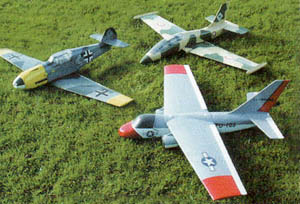
- Vortex EPP Me-109, Aermachhi 339 and S-3 Viking
-
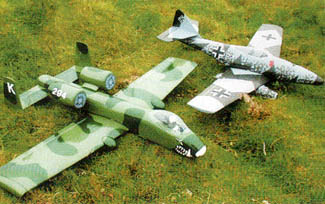
- Purposeful EPP A-10 and Me262 – from Vortex

Andy Conway and his BP P.111A
In 2000 at the Lleyn Peninsula meeting in North Wales there was an entry of some 26 models. Fliers travelling from as far afield as Scotland, Yorkshire, Suffolk, Berkshire, Bucks and Somerset.
The event was convincingly won by Andy Conway, from Edinburgh, with his own design version of the Bolton Paul P111 delta, (photo 26, left) finished in an all yellow colour scheme.
Andy’s performance gained him the PSSA Northern Trophy. This comparatively small model had a span of 36”. The total weight was 2¼ lbs and the wing loading came out at 15 oz/sq foot. The foam wings had an Eppler 182 root section changing to an Eppler 374 section at the tips.
The following month at the Pendle Hill meeting in Lancashire another new delta aircraft took to the air, as Stewart Redfern entered his own design of the Avro 707. (photo 27, below)
The full sized aircraft was one of three similar deltas produced by A.V. Roe as part of the Avro Vulcan bomber development program. Stewart’s model of 34” span weighed only 2lbs and had an Eppler 180 section. Mainly constructed of wood it was covered in lightweight glass cloth and epoxy resin.
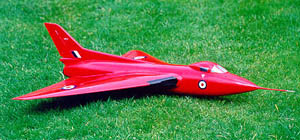
Avro 707 O/D model by Stewart Redfern
The aircraft initially had a disappointing performance due to tail heaviness. The original C of G calculation proved to be incorrect. However with the addition of more ballast in the nose, resulting in a forward movement of the C of G, the performance was greatly improved. The Avro delta is now a steady flier and includes smooth loops and rolls in its performance.
Next month we shall conclude this series bringing you up to date with the most recent PSS developments.
The following table lists plans and kits available for some of the models described in this issue:-
| Martin B-57D by Vic Steel (Plan MW2946)
Zlin 526A Akrobat by Jack Edwards (Plan MW2747) Gulfstream 5 by Paul Janssens (Plan MW2673) Macchi 202 by Paul Janssens (Plan MW2721) Fairey Firefly Mk4 by Paul Janssens (Plan MW2740) Lockheed T-33 by Paul Janssens (Plan MK2501) ALL ABOVE PLANS available from Traplet Publications Ltd, Traplet House, Pendragon Close, Malvern, Worcestershire WR14 1GA. Tel : 01684 588500
Supermarine Attacker by Stewart Redfern Available via the PSSA – Alan Hulme Tel : 01244 336472
Kits are available for the following PSS designs from VORTEX VACFORMS Me-109E, Me-262, Airmacchi 339, Republic A-10A Thunderbolt II, Lockheed S-3 Viking For more info on Vortex Models visit their website through the Suppliers Page.
Contact us at the PSSA for more information |